
Better care after disbudding: one farm’s experience with Ambugreenᵀᴹ
A Northamptonshire calf unit switched from topical spray to Ambugreen in a group of 40 calves. At day 7, 98 % of disbudding sites were healed or healing well with no signs of infection.
Anyone who disbuds calves regularly knows the problem. After the procedure, you’re left with an open burn site on the top of a calf’s head that’s awkward to protect. It’s curved. It’s got hair round it. And in summer, flies find it immediately.
Most farmers reach for an antibiotic spray. It’s quick, familiar, and it’s what’s always been used. But sprays wash off and they need re-applying. On a busy day with 30 or 40 calves to disbud, that’s time and product adding up.
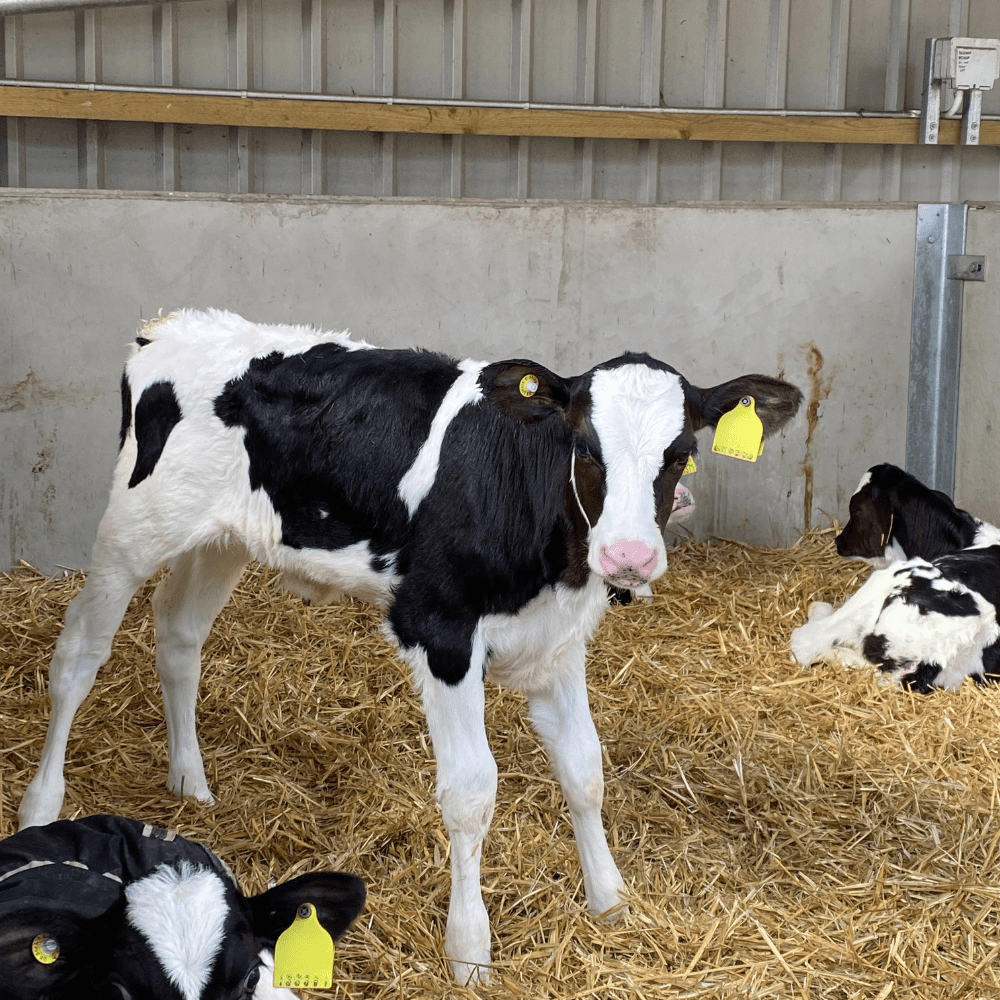
One calf-rearing unit in Northamptonshire decided to try a different approach. In July 2025, they used Ambugreen, a waterproof gel barrier, on 40 calves after disbudding instead of their usual spray. Their vet carried out the procedure under sedation, with nerve blocking, and came back a week later to check how the calves were doing.

Why sprays struggle at the disbud site
Sprays can coat the surface, but they don’t stay put for long.
In summer conditions especially, spray protection breaks down quickly:
-
- Water-based formulas wash off in wet or muddy conditions.
- They blow away on application outdoors.
- Flies are not deterred by a thin spray coating.
- Sites need repeat applications as the product wears off.
The result is a vulnerable area that looks protected but often isn’t.
What is Ambugreen?
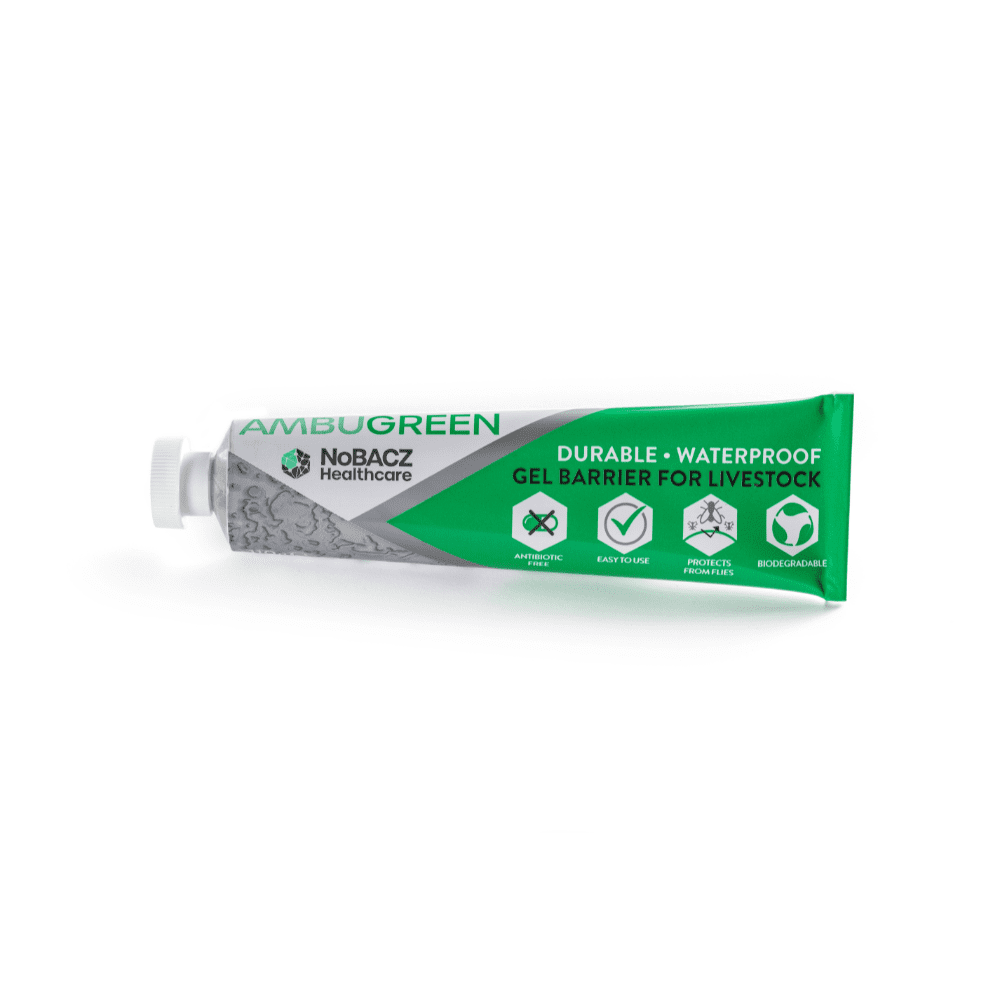
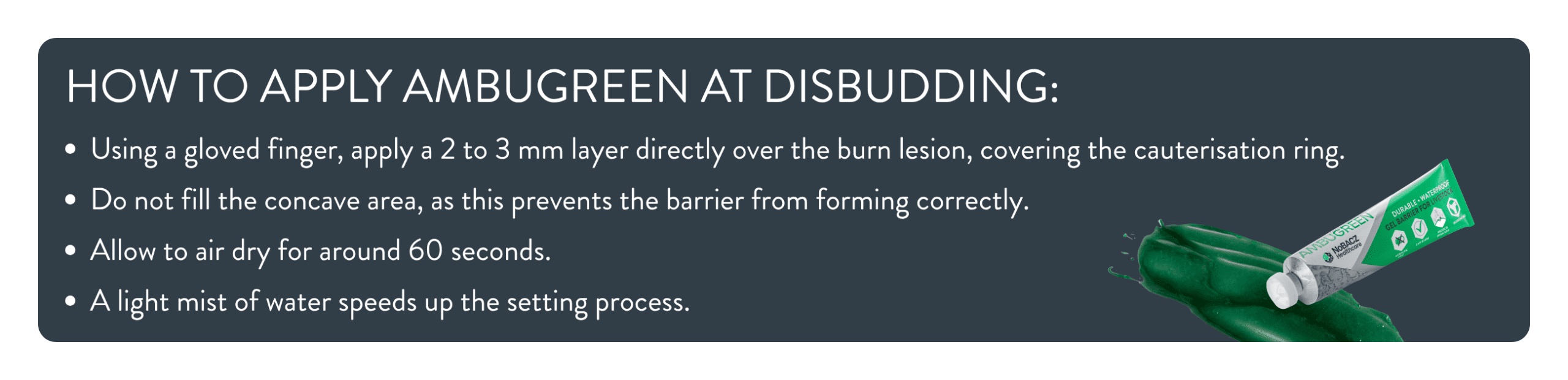
Ambugreen is a waterproof gel barrier developed by NoBACZ Healthcare. It comes in a tube and is applied with a gloved finger directly over the disbud site. Once on, it sets in about 60 seconds to form a flexible, waterproof layer that sticks to the disbud site and stays there.
Because it is bio-resin-based rather than water-based, Ambugreen does not wash off. It provides a physical barrier against flies, dirt, and bacteria, and lasts 1 to 3 days without re-application. It breaks down naturally over time, so there is no need to remove it.
Ambugreen is antibiotic-free and made from food-and-feed-grade ingredients.
How it worked on-farm
On this batch of 40 calves in July 2025, the staff used Ambugreen on every disbud site immediately after the procedure. No antibiotic spray was used. Approx. 82 g of Ambugreen from a single 110 g tube was enough for all 40 calves. Their usual protocol would have used 1.5 – 2 150 ml aerosol spray cans for the same group.
By moving from topical antibiotic spray to Ambugreen, the farm’s antibiotic usage could be reduced by 1.43 mg/PCU, which would account for 9 % of the average antibiotic usage on dairies.
Calves were weighed before disbudding, and again in the following week to check whether the procedure or the product had any effect on growth.
What the vet tech found at day 7
The vet returned seven days later to assess each disbud site. The results were clear.
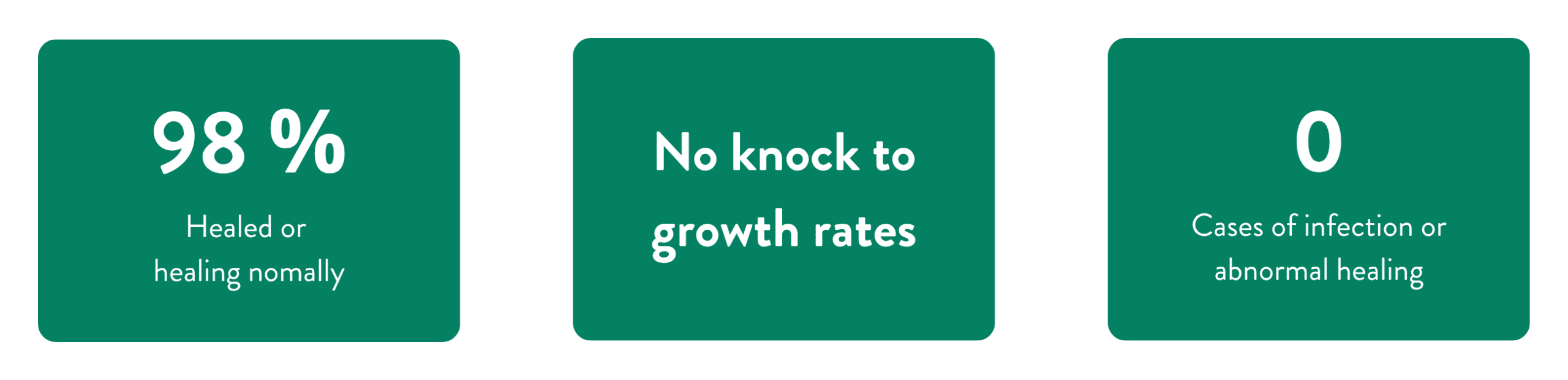
For context, disbud sites typically take 54 to 63 days to fully heal1,2. Seeing 98 % healed or healing normally at day 7 is well ahead of that curve, and the staff perceived healing to the happening at a faster rate than with previous products. No calves displayed abnormal healing or signs of infection following disbudding, which is better than the ~6 % observed in peer-reviewed studies3.
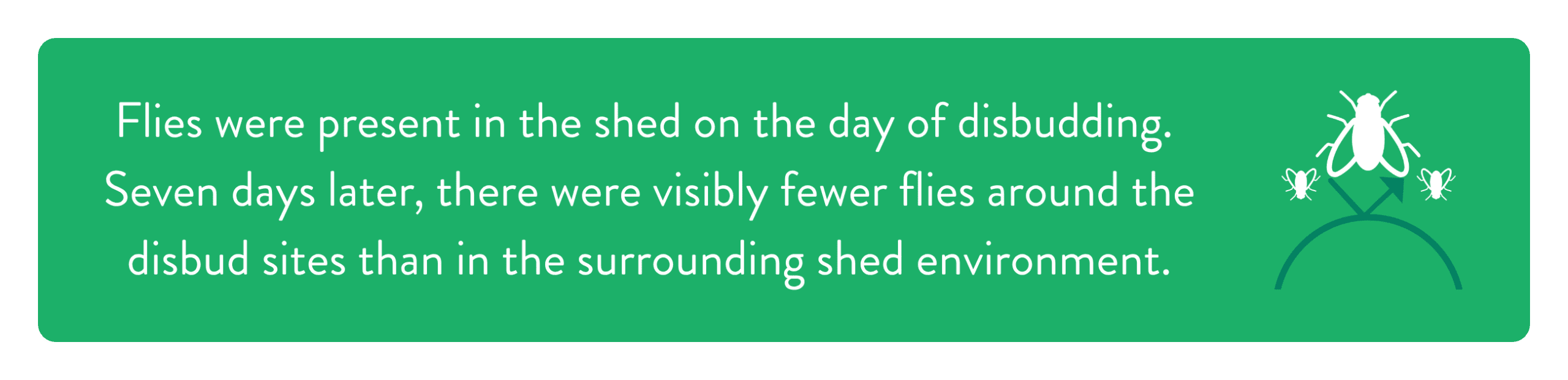
The procedures took place in July, at the height of a hot summer, with flies clearly present on the day. Despite that, no fly-related problems were reported across the group in the following week.
The weight data showed no negative effect on growth rates in the week after disbudding. All calves were bright and well at the follow-up visit.
What this means in practice
One tube. One application per calf. No going back to re-apply.
82 g of Ambugreen covered 40 calves. That is around 2 g per calf, applied quickly and easily with a gloved hand. It sets within 60 seconds, stays put, and keeps flies off the site for days, not hours.
For farms looking to simplify their post-disbudding routine, particularly during fly season, Ambugreen does the job in one pass. The antibiotic-free formula means there are no concerns about residues or topical antibiotic use, and the results from this farm show strong healing and zero infections.
Try Ambugreen for yourself
Ambugreen is available to purchase from your vet or agricultural merchant.
Click here to find your nearest stockist
References
-
Adcock, S. J. J., & Tucker, C. B. (2018). The effect of disbudding age on healing and pain sensitivity in dairy calves. Journal of Dairy Science, 101(11), 10361-10373.
-
Adcock, S. J. J., Vieira, S. K., Alvarez, L., & Tucker, C. B. (2019). Iron and laterality effects on healing of cautery disbudding wounds in dairy calves. Journal of Dairy Science, 102(11), 10163–10172. https://doi.org/10.3168/jds.2018-16121.
-
Huebner, K., Kunkel, A., McConnel, C., Callan, R., Dinsmore, R., & Caixeta, L. (2017). Evaluation of horn bud wound healing following cautery disbudding of preweaned dairy calves treated with aluminum-based aerosol bandage. Journal of Dairy Science, 100, 3922–3929. https://doi.org/10.3168/jds.2016-12192
Ridgway, R., Neary, J., Turner, A., Barrett, D. C., & Gillespie, A. (2022). Evaluation of Horn Bud Wound Healing Following Cautery Disbudding of Dairy Calves With and Without the Use of Oxytetracycline Aerosol Spray. Frontiers in Veterinary Science, 9.
RUMA. (2024). RUMA Targets Task Force 2: Four Years On.